Introduction
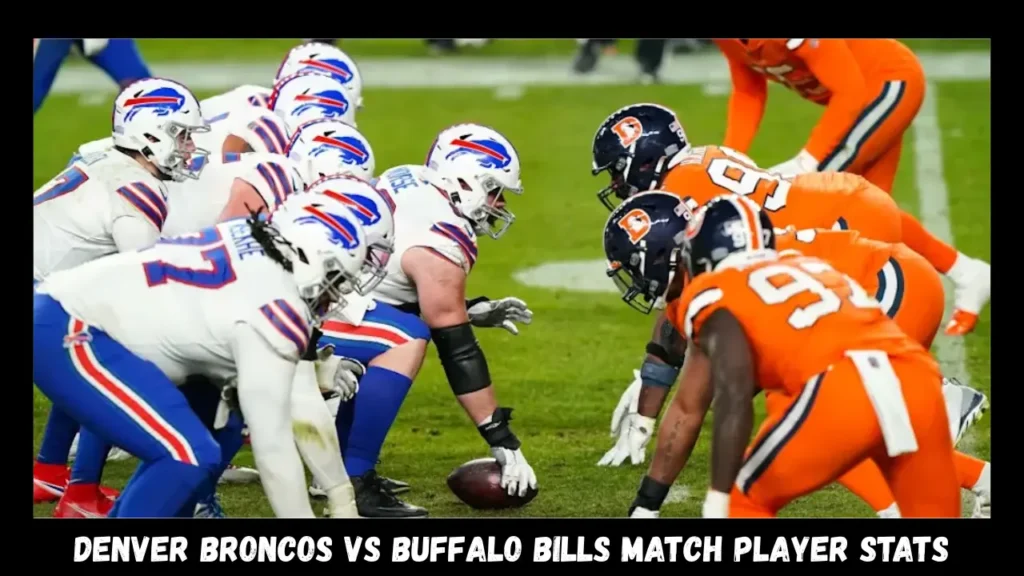
The Denver Broncos vs Buffalo Bills Match Player Stats is one that consistently draws attention from NFL fans due to the contrasting identities and competitive spirit of both teams. Whenever these franchises meet, the focus quickly shifts to individual performances and how player contributions shape the outcome. Denver Broncos vs Buffalo Bills match player stats provide a detailed narrative of the game, revealing momentum swings, strategic decisions, and standout efforts that go far beyond the final score.
Importance of Match Player Stats in NFL Analysis
Denver Broncos vs Buffalo Bills Match Player Stats statistics are essential for understanding how a game truly unfolded. While the scoreboard tells who won, player stats explain why. Passing yards, rushing efficiency, defensive stops, and special teams contributions collectively paint a full picture of execution on both sides. In a Broncos vs Bills game, where both teams rely on disciplined systems and impact players, individual stats highlight which athletes rose to the challenge and which units controlled key moments.
Quarterback Performance and Offensive Command
Quarterback play is central to any Denver Broncos vs Buffalo Bills Match Player Stats. The Bills quarterback is often a focal point due to his dual-threat ability, contributing through both passing and rushing. Player stats such as completion percentage, passing yards, total touchdowns, and interceptions reveal how effectively he managed the offense and responded to defensive pressure.
Passing Game Efficiency and Distribution
Passing efficiency goes beyond raw yardage. Denver Broncos vs Buffalo Bills Match Player Stats related to yards per attempt, third-down conversions, and red-zone passing provide deeper insight into offensive success. In Broncos vs Bills matchups, the Bills often showcase aggressive passing concepts, leading to higher passing volumes and explosive plays.
Rushing Stats and Ground Game Influence
The running game plays a pivotal role in shaping the flow of the game. Denver Broncos vs Buffalo Bills Match Player Stats rushing stats often reflect an effort to control time of possession and limit the Bills’ offensive opportunities. Total rushing yards, attempts, and yards per carry indicate how effectively the Broncos established physicality. For the Bills, rushing stats frequently include quarterback contributions, adding complexity to defensive assignments.
Wide Receiver Contributions and Big-Play Ability
Wide receivers are often responsible for game-changing moments in Denver Broncos vs Buffalo Bills Match Player Stats. Receiving stats such as receptions, total yards, and touchdowns show which players consistently created separation and capitalized on coverage breakdowns. The Bills’ receivers are known for explosive potential, and their stats often include long receptions that shift field position dramatically. Broncos receivers may focus more on contested catches and route precision, with stats reflecting reliability in crucial situations like third downs and red-zone plays.
Tight End Involvement and Middle-of-the-Field Impact
Tight ends play a vital but sometimes understated role in this matchup. Their player stats may not always dominate headlines, but receptions in traffic and red-zone targets are often decisive. Tight ends frequently serve as security blankets for quarterbacks under pressure, and their stats reflect trust and situational importance rather than volume alone.
Offensive Line Performance Reflected in Stats
Although offensive linemen do not accumulate traditional stats, their impact is evident in team metrics. Sacks allowed, rushing efficiency, and quarterback pressure rates all reflect offensive line performance. In Broncos vs Bills games, the team that protects its quarterback more effectively often sees stronger passing stats and fewer turnovers. Strong offensive line play also supports balanced player stats across the offense, allowing both passing and rushing attacks to function efficiently.
Defensive Tackles and Physical Presence
Defensive player stats provide insight into how each team attempted to disrupt the opposing offense. Total tackles, solo tackles, and assists highlight which defenders were most involved. Linebackers often lead in tackles due to their responsibilities in both run defense and pass coverage. In Broncos vs Bills matchups, high tackle counts may indicate sustained defensive effort against long drives or an emphasis on limiting yards after contact.
Sack Totals and Quarterback Pressure
Sacks are among the most impactful defensive stats in any NFL game. Broncos vs Bills match player stats often reveal which defensive front generated consistent pressure. Edge rushers and interior linemen who record sacks can alter offensive rhythm and force hurried decisions. Even when pressures do not result in sacks, they influence passing accuracy and timing. These effects often appear indirectly in completion percentages and interception totals.
Interceptions and Turnover Statistics
Turnovers frequently define the outcome of tightly contested games. Interception stats highlight which defensive backs capitalized on mistakes or executed disciplined coverage. Forced fumbles and recoveries also play a crucial role in shifting momentum.In Broncos vs Bills matchups, a single turnover can swing field position and scoring opportunities, making these defensive stats especially significant.
Secondary Performance and Pass Coverage
Cornerbacks and safeties influence the passing game through coverage discipline and anticipation. Passes defended and interception opportunities reflect how effectively defensive backs challenged receivers. Strong secondary play often results in lower yards per attempt and fewer explosive passing plays allowed. In this matchup, secondary stats reveal which team succeeded in limiting big plays and forcing the opposing offense to rely on shorter, less efficient gains.
Special Teams Player Stats and Hidden Advantages
Special teams often provide hidden advantages that do not always receive attention. Kick return yards, punt averages, and coverage efficiency all influence field position. In Denver Broncos vs Buffalo Bills Match Player Stats, special teams player stats can reveal subtle momentum shifts created by strong returns or well-placed punts. Kicker stats, including field goal accuracy and extra point reliability, directly impact scoring. Missed kicks or clutch makes can significantly alter the emotional flow of the game.
Red Zone Efficiency and Scoring Breakdown
Red zone performance is a critical area reflected in Denver Broncos vs Buffalo Bills Match Player Stats. Touchdowns versus field goals often determine close outcomes. Running backs and receivers who excel in tight spaces frequently stand out in red-zone statistics. Defensive red-zone stops highlight discipline and execution under pressure. Player stats in these situations show who delivered when the margin for error was smallest.
Third-Down Performance and Drive Extension
Third-down conversion stats are key indicators of offensive sustainability. Players who consistently contribute on third down help extend drives and maintain possession. In Denver Broncos vs Buffalo Bills Match Player Stats, third-down efficiency often correlates strongly with time of possession and overall control of the game. Defensive third-down stops are equally important, forcing punts and creating additional opportunities for the offense.
Coaching Strategy Reflected Through Player Stats
Player stats often mirror coaching philosophies and in-game adjustments. Run-pass balance, blitz frequency, and coverage schemes all influence individual numbers. In Broncos vs Bills games, halftime adjustments frequently result in noticeable changes in Denver Broncos vs Buffalo Bills Match Player Stats during the second half. These shifts reflect strategic responses to early trends and highlight the chess match between coaching staffs.
Role Players and Unexpected Contributors
Not all impactful performances come from star Denver Broncos vs Buffalo Bills Match Player Stats. Role players often provide critical contributions that appear in the stat sheet at pivotal moments. A backup receiver’s key catch or a rotational defender’s timely sack can shift momentum and influence the final outcome. These under-the-radar stats add depth to the overall narrative of the game.
Statistical Trends Throughout the Game
Examining how Denver Broncos vs Buffalo Bills Match Player Stats evolve over the course of the game provides insight into momentum changes. Early dominance in rushing yards or late-game passing surges reveal strategic shifts and endurance. These trends help explain how one team gained or lost control as the game progressed. and individual recognition. Stats become a bridge between on-field action and long-term evaluation.
Historical Context of Broncos vs Bills Player Stats
Looking at player stats in the context of past matchups adds historical depth. Certain Denver Broncos vs Buffalo Bills Match Player Stats may consistently perform well against a specific opponent, establishing patterns that influence preparation and fan expectations. These recurring trends become part of the broader rivalry narrative. Fans and analysts rely heavily on player stats to evaluate performances and debate outcomes. In Broncos vs Bills matchups, these numbers fuel discussions about team identity, playoff potential.
Impact of Injuries on Player Statistics
Injuries can significantly affect player stats and overall performance. When key contributors are limited or absent, others must step into expanded roles, often resulting in unexpected stat leaders. Understanding these circumstances is essential for accurately interpreting Denver Broncos vs Buffalo Bills Match Player Stats. Ultimately, player stats reflect each team’s identity. The Bills often showcase versatility and explosive potential, while the Broncos emphasize structure, discipline, and physicality. These characteristics are evident in how stats accumulate across offense, defense, and special teams.
Conclusion
Denver Broncos vs Buffalo Bills match player stats provide a comprehensive story of execution, strategy, and individual effort. By analyzing quarterback play, rushing efficiency, defensive impact, and special teams contributions, fans gain a deeper understanding of how the game unfolded. These statistics transform isolated plays into a cohesive narrative, capturing the intensity and complexity of one of the NFL’s most compelling matchups.
You May Also Read: Philadelphia Eagles vs Dallas Cowboys Match Player Stats
