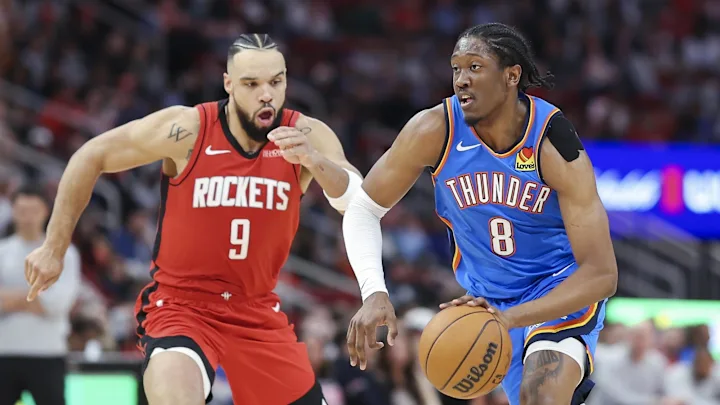
Introduction
When the Houston Rockets vs OKC Thunder Match Player Stats, fans and analysts alike pay close attention not only to the final score but also to the match player stats that reveal how individual performances shaped the game. In the NBA, numbers tell stories that extend beyond points scored—they illuminate who dominated the glass, disrupted offenses, executed on both ends of the floor, and influenced momentum shifts. Player statistics are essential for understanding team strategy, individual impact, and how specific matchups play out in real time.
Offensive Leaders Who Took Control
The Houston Rockets vs OKC Thunder Match Player Stats often rely on a blend of youth and emerging talent to fuel their offense. In this matchup, the Rockets’ scoring stats reflect both individual effort and collective ball movement. The leading scorer for the Rockets recorded notable point totals while maintaining efficient shooting percentages. Field goal attempts, three-point conversions, and free throws drawn all contribute to a rounded offensive performance. Efficient shooting from key players often indicates effective execution of offensive sets and confidence in scoring opportunities.
Thunder Scoring Contributions
The Houston Rockets vs OKC Thunder Match Player Stats entered the game with a reputation for versatile scorers capable of attacking the paint and stretching defenses with perimeter shooting. Their leading scorer demonstrated offensive aggression, combining isolation opportunities with catch-and-shoot effectiveness. Thunder players who finished with significant point totals did so through a blend of efficient shooting and relentless offensive rebounding. Their stat lines often include a higher number of field goal attempts, reflecting initiative and involvement in offensive flow.
Shooting Efficiency and Shot Selection
Field goal percentage (FG%) is a foundational stat for measuring offensive efficiency. Houston Rockets vs OKC Thunder Match Player Stats who posted higher FG% figures typically capitalized on open looks created through ball movement or defensive rotations. A strong three-point percentage also indicates successful spacing and execution of catch-and-shoot plays.
Thunder Shooting Efficiency
For the Houston Rockets vs OKC Thunder Match Player Stats, shooting efficiency can reveal how well their game plan was executed. High FG% across multiple players indicates effective playmaking and shot distribution. It often correlates with strong offensive sets designed to create favorable matchups. Three-point shooting is especially significant. OKC’s perimeter threats who maintained high accuracy from beyond the arc forced defensive adjustments, creating driving lanes and opportunities for secondary actions.
Playmaking and Assist Statistics
Assists are a primary indicator of teamwork and ball movement. In this matchup, Houston Rockets vs OKC Thunder Match Player Stats who recorded a high number of assists contributed significantly to offensive fluidity. High assist totals often reflect a willingness to share the ball and create open looks for teammates rather than relying on individual isolation scoring. Assist-to-turnover ratio is another key metric. A higher ratio indicates efficient decision-making and ball security—especially important for a developing team like the Rockets, where minimizing unforced errors accelerates offensive rhythm.
Thunder Assist Numbers
Houston Rockets vs OKC Thunder Match Player Statsplaymakers often excel at initiating offense in both half-court and transition settings. Their assist numbers show how frequently scoring opportunities were generated through movement and timing rather than individual heroics. Thunder players with noteworthy assist totals also tend to create scoring opportunities out of ball screens and drive-kick scenarios, forcing defenses to rotate and open up perimeter shots. Turnover statistics in conjunction with assists reveal which players balanced aggression with smart decision-making.
Rebounding Controlling the Glass
Rebounding—both offensive and defensive—is critical for possession control. For the Houston Rockets vs OKC Thunder Match Player Stats leading in rebounds demonstrated physicality and awareness. Defensive rebounds end opponent possessions and trigger transition offense, while offensive rebounds create second-chance scoring opportunities. High rebounding totals for the Rockets often indicate an aggressive approach to board play, with players crashing the glass after shots and positioning themselves effectively against Thunder defenders.
Thunder Rebounding Efforts
Houston Rockets vs OKC Thunder Match Player Stats rebounding stats often highlight frontcourt players who contributed significantly on both ends. Defensive rebounds help restrict second-chance points, while offensive rebounds maintain possession and generate additional scoring opportunities. High rebounding numbers from Thunder players often correlate with their spacing strategy: securing the boards while spacing the floor allows primary scorers to operate freely without constant pressure.
Defensive Contributions Blocks, Steals, and Contest Stats
Defense wins championships, and Houston Rockets vs OKC Thunder Match Player Stats such as blocks, steals, deflections, and contested shots help quantify defensive impact. Rockets defenders who recorded multiple steals and deflections showcased anticipation and quick hands, creating transition opportunities from turnovers. Block statistics reflect rim protection and interior presence. Rockets players contributing in this area disrupted shots and altered offensive plans for the Thunder. Contest statistics—though not always shown in basic box scores—indicate how effectively defenders pressured shooters, forcing tough shots and reducing scoring efficiency.
Thunder Defensive Metrics
For the Houston Rockets vs OKC Thunder Match Player Stats, defensive contributions often come through disciplined team rotations and communication. Players posting high steal numbers demonstrated anticipation and positioning awareness. Block numbers from Thunder big men reflect interior deterrence—preventing easy baskets in the paint and influencing Rockets’ shot selection. Combined defensive pressure also shows up in opponent turnover numbers, where well-timed traps and rotations create forced errors.
Turnovers and Ball Security
Turnover statistics reveal how often a team relinquishes possession, affecting overall possession value and scoring opportunities. Houston Rockets vs OKC Thunder Match Player Stats with lower turnover rates maintained ball security, maximizing possessions and reducing fast-break opportunities for the Thunder. Forced turnovers—where defenders actively disrupt ball handlers—also highlight defensive aggression.
Thunder Turnovers
Houston Rockets vs OKC Thunder Match Player Stats turnover stats reflect both ball pressure from the Rockets and internal decision-making metrics. Players who turned the ball over frequently may have faced pressure situations or rushed passes. Conversely, low turnover totals signal disciplined ball control and effective decision-making under duress. Points off turnovers—a derived stat—shows how often a team capitalized on opponent mistakes, turning defensive efforts into scoring opportunities.
Bench Contributions and Role Players
Depth is a key factor in NBA success, and bench contributions often influence game flow. Rockets role players who scored efficiently off the bench provided crucial spacing and offensive energy. Bench Houston Rockets vs OKC Thunder Match Player Stats who recorded rebounds, assists, or defensive stops added balance and helped maintain performance levels when starters rested. These contributions show the depth and readiness of the team.
Thunder Bench Impact
For the Thunder, bench contributions often come from experienced role Houston Rockets vs OKC Thunder Match Player Stats or emerging talents. Their ability to provide scoring, defensive presence, or ball movement off the bench stabilizes momentum when starters rotate out. Bench players with high plus-minus figures reflect positive impact when shared minutes on the court occurred.
Efficiency Metrics True Shooting and Player Impact Rating
Rockets players who achieved high TS% demonstrated scoring efficiency by balancing field goals, three-pointers, and free throws effectively. A compelling PIR reflects contributions across multiple stat categories. For the Thunder, efficiency metrics reveal how well players maximized possessions. High TS% indicates excellent shot selection and execution, while balanced PIR scores reflect multi-faceted impact—scoring, assisting, and defending.
Plus-Minus and On/Off Court Impact
Plus-minus statistics show how team performance changed with specific players on or off the court. Rockets players with high plus-minus figures significantly contributed to positive scoring margins, indicating effectiveness in collaborative team play. Similarly, Thunder plus-minus stats reflect which combinations of players produced strong periods of offensive and defensive stability.
Individual Standout Performances
The Rockets’ standout performers demonstrated scoring efficiency, rebounding strength, and defensive contributions. These players often showed leadership in minutes played and clutch situations, pushing their teams forward during critical stretches. Thunder leaders typically posted balanced stat lines—strong scoring, assist distribution, and defensive pressure. Their overall influence often helped sustain offensive runs and disrupt Rockets’ defensive schemes.
Conclusion
When analyzing Houston Rockets vs OKC Thunder Match Player Stats, it becomes clear that the story of the game extends far beyond the final score. Player statistics reveal who dictated tempo, controlled possessions, influenced defensive stops, and sustained offensive efficiency. From scoring leaders to defensive contributors, bench depth to rebounding battles, the numbers help fans and analysts alike appreciate the complexity and nuance of NBA competition.
You May Also Read: Memphis Grizzlies vs Phoenix Suns Match Player Stats
